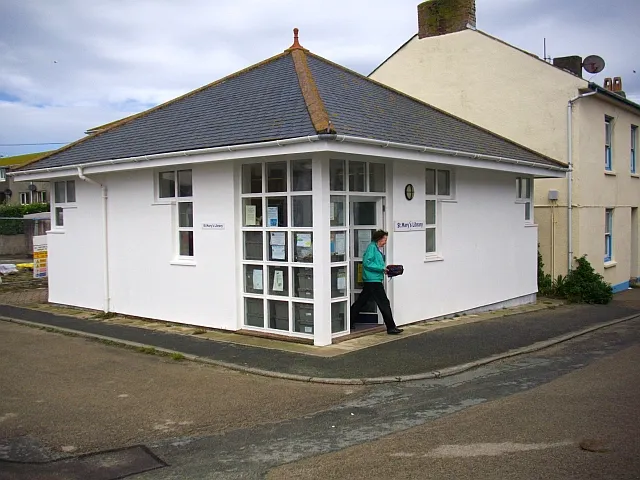
Kitchen Table Reference: Retired Head Librarian Margie Otts Still Fields Luverne's Strangest Questions
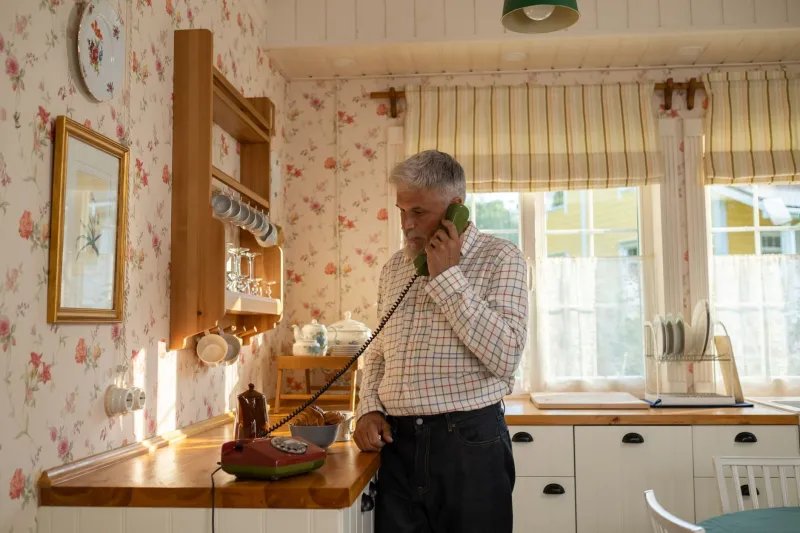
Margie Otts keeps a spiral notebook on her kitchen table. It's not for recipes or grocery lists. It's a running log of the questions people still call her to ask — questions that, technically speaking, stopped being her problem six years ago.
"Last week it was somebody wanting to know if the old Luverne Hotel really had a bowling alley in the basement," she says, flipping to a page dense with her small, tidy handwriting. "I told them I'd have to check with Hank over at the historical society. And then I did."
That's the thing about Margie. She retired as head of reference at Luverne Public Library in 2019 after 31 years, and she never quite put the job down. Current staff — some of whom she trained herself — still call her two or three times a week. Not for anything in the catalog. For the kind of knowledge that has never been in a catalog at all.
What Luverne Actually Asks
Ask Margie what people wanted to know over three decades, and she doesn't hesitate.
"Genealogy, first. Always genealogy. Whose farm was this before the war, who married into the Sorensen family, where's the cemetery plot nobody can find." She pauses. "Then it's legal-adjacent stuff. Not legal advice, mind you — I never gave legal advice. But 'what does this word in my lease mean' came up plenty."
There were the tax-form pilgrimages every February. The recipes people needed translated from handwriting on a church cookbook page. The man who called once a month for years to confirm the correct spelling of a word he already knew how to spell.
And then there was the great chicken question of 2004.
"A fellow came in wanting to know how many chickens he could legally keep inside city limits. That turned into a two-week project," Margie laughs. "We found the ordinance. He got his chickens. I went to his backyard coop for a tour. Best reference interaction of my career, honestly."
Google Didn't Kill the Question — It Changed It
The easy assumption is that search engines made reference librarians obsolete. Margie doesn't buy it, and the numbers back her up. What she noticed, starting in the late 2000s, is that the questions didn't disappear. They got harder.
"People stopped asking us what they could find themselves," she explains. "Nobody calls the library anymore to ask who won the 1972 World Series. So what's left is the stuff that doesn't Google well. 'My grandmother came through Rock County in 1911 and I can't find her name anywhere.' 'This record says one thing and that website says another.' 'I don't know what I'm looking for.'"
That last one, she says, was always her favorite kind of patron.
"Half the job was helping people figure out what their question actually was. A search bar can't do that. It just waits for keywords."
The Kitchen Table Archive
Margie's kitchen table setup is modest: the notebook, a county plat map from 1988, three library cards from her own years of borrowing, and a rotary-dial phone she refuses to replace because, in her words, "it works and it keeps my calls short."
Current reference staffer Dana Whitfield calls Margie "our last-resort database." When the staff hits a wall — an unindexed newspaper, a name that appears in three different spellings, a local business that closed before anything was digitized — Dana says somebody reaches for the phone.
"We have subscription databases, we have the state archives, we have interlibrary loan," Dana says. "But Margie has memory. Thirty-one years of memory, cross-referenced. You can't subscribe to that."
Margie, for her part, insists she doesn't mind. "People worry I'll feel used. It's the opposite. Retiring from the desk is one thing. Retiring from curiosity? I couldn't do it if I tried."
Why a Human Still Beats a Search Bar
There's a lesson tucked into Margie's notebook, and it's bigger than nostalgia. The questions that reach her kitchen table are the ones that require context — local context, personal context, the kind of context that only accumulates when you've spent a career in one community.
A search engine can retrieve. A librarian, Margie will tell you, connects. Connects the patron to the source, the question to the questioner, the past to the person standing at the desk asking.
"Anybody can find information," she says, closing the notebook. "The trick is knowing what information somebody needs before they know it themselves. That took me about ten years to learn. I've got twenty-one more years of practice than the internet does."
So if you call Luverne Public Library with a question that stumps the room, don't be surprised if a staffer picks up a different phone — one with a dial tone in a kitchen across town, where the reference desk never really closed.