Ankle-Height Intelligence: The Shelvers Who Read Luverne Before Anyone Else Does

If you want to know what Luverne is going to read next year, don't check the bestseller lists. Crouch down.
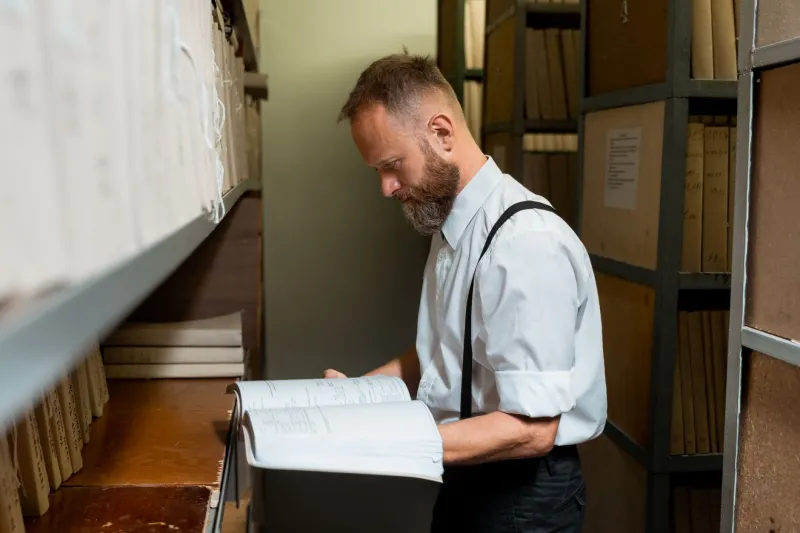
That's where the real data lives — at ankle height, on the bottom shelves, in the hands of the people who put every book back where it belongs. Our shelving crew doesn't carry clipboards or run focus groups. They just notice things. And over the years, those small observations have quietly steered almost every purchasing decision this library has made.
The Spine Tells You Everything
Dana K., who has shelved here for eleven years, can read a book's history from six feet away.
"A book that gets checked out a lot comes back different," she says. "Cracked spine, soft corners, that coffee ring on page 112. The books nobody touches still smell like the printing press."
When Dana shelved the same copy of a certain Amish romance four times in one October, she mentioned it to acquisitions. We bought three more. All three now have waiting lists.
That's the pattern that repeats all over the building: the shelvers see what the catalog can't. The database knows a book went out and came back. Dana knows it came back falling apart, and that somebody asked her — a stranger with a cart — whether there were "more like this one."
The Empty Display Problem
Here's a trick most patrons never think about: our front displays aren't curated by a committee. They're curated by absence.
"If I set up a display on Monday and it's stripped bare by Thursday, that's not a failure," explains Marcus, who handles the large-print endcap near the front windows. "That's a demand signal. We refill it, and if it empties again, that title goes on the buy list."
Last spring, a modest display of Lake Superior mysteries — chosen mostly because a donor dropped off a box of them — emptied twice in three weeks. We now own fourteen titles in that subgenre. There is a waiting list for most of them, and Marcus is widely blamed.
Holds Lists Are Just the Start
The holds queue gets all the credit for shaping our collection, and sure, it matters. But holds only capture the readers who already know what they want.
The shelvers catch the other kind — the browsers, the wanderers, the kid who pulls the same dinosaur book off the shelf every visit and never checks it out because "Dad says we have too many."
"That kid is telling us something," Dana laughs. "We bought two more dinosaur books. His dad found out eventually."
Why the Future of Reading Lives Near the Floor
Publishers spend millions on trend forecasting. We spend the cost of a rolling cart and a little shoe leather. And honestly, the shelf-level view beats the industry reports more often than you'd think.
Bottom shelves get less browsing traffic, so anything that still circulates from down there is a genuine favorite, not a cover-driven impulse grab. When a bottom-shelf regular gets worn out, we replace it and buy its neighbor titles too.
So the next time you see someone crouched in the 700s with a cart, muttering at a bent paperback — that's not just shelving. That's Luverne's reading future being mapped, one worn spine at a time.
And if you've got a book you think we should know about? Tell a shelver. They're listening. They're always listening.