The Ring-Binder Gospel: What Luverne's Church Cookbooks Say About Us, Recipe by Recipe
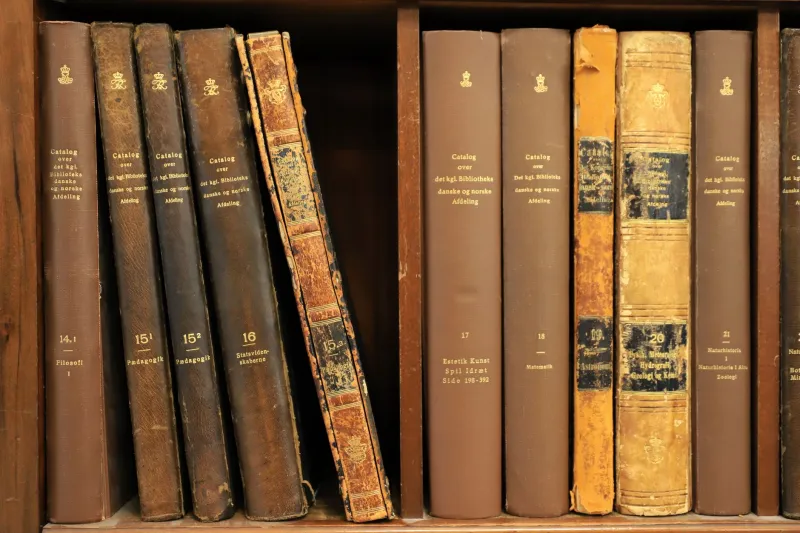
Walk past the public computers, hang a left at the large-print westerns, and you'll hit a shelf that smells faintly of nutmeg and old paper. This is the reference room's cookbook collection: roughly ninety spiral-bound volumes produced by Luverne-area churches, service clubs, and one memorable 4-H group between the late 1940s and the present. They don't circulate. They can't. Most are held together by a single plastic comb and the collective will of a congregation.
And yet they might be the most-read books in the building. Genealogists pull them for the names. Home cooks pull them for the bars. More than one local family has used a 1972 Lutheran ladies' aid cookbook as a de facto family tree.
A Shelf That Smells Like History (and Margarine)
The collection started almost by accident. According to our accession records, the library began accepting cookbook donations in the 1980s when a retiring church secretary dropped off two grocery bags of duplicates. Librarians noticed something: people kept asking for them. Not to borrow—just to sit and read. A cookbook printed by a church that closed in 1998 is, it turns out, a historical document. It's also the only surviving record of who made the best bars at the funeral lunch.
Flip through a 1957 Methodist volume and you'll find "Mock Chicken Loaf" and a recipe for "Spanish Rice" that contains exactly zero Spanish ingredients. A 1989 Catholic parish collection includes a page titled "Microwave Tips!" that has aged like milk. The 2003 Presbyterian edition has a section called "Light & Healthy" that is mostly, bless them, mayonnaise.
The Rivalry Simmers (Not Just the Soup)
Here's the thing nobody puts in the church newsletter: these books are competitive. Page counts are competitive. Bar recipes are competitive. We have a 1968 volume from one congregation whose "Lemon Bars" page contains a handwritten note—clearly added later—saying only: "Ours are better." Ours. As if the other church's lemon bars were listening.
Staff favorite: a 1974 cookbook where two women submitted nearly identical hotdish recipes under slightly different names, each crediting "my own invention." Both recipes contain a can of cream of mushroom soup. Neither woman invented it. The late Doris Halvorsen, whose copy we hold, underlined both entries and wrote in the margin: "Ha."
We Cooked the Books: Three Staff Taste Tests
To be fair to the collection, we didn't just read it. We cooked from it. Three staff members, three recipes, one small kitchen in the break room, and a shared understanding that somebody had to do this.
Test One: "Funeral Hotdish" (1972, First Lutheran). The recipe calls for ground beef, cream of chicken soup, tater tots, and a full cup of shredded cheese. No seasoning. None. Circulation clerk Renae described it as "sincere." Page assistant Marcus called it "the flavor of being nice to someone at a difficult time." We ate all of it.
Test Two: "Watergate Salad" (1985, St. Catherine's). Pistachio pudding, marshmallows, pineapple, Cool Whip. The name is a mystery; the appeal is not. This one disappeared fastest. Reference librarian Dana noted it "tastes like a church basement in the best possible way."
Test Three: "Elaine's Rhubarb Bars" (1996, Bethlehem Lutheran). Rhubarb, a shortbread crust, and a streusel top that required—we are not kidding—a full stick of butter. Best of the three. The margin notes in our copy said "good but double the crust," and reader, we doubled the crust. The margin was right.
The Marginalia Is the Real Treasure
We hold multiple copies of several church cookbooks, and no two are identical. One donor's copy is pristine. Another has a decade of penciled edits: "too dry," "use 9x13," "do NOT take to potluck." A 1981 volume includes a handwritten recipe for "Emergency Bars" tucked into the back. No author. No church. Just a recipe that appears to have been passed around like a rumor.
For local historians, this is gold. These annotations show what people actually cooked—not what they submitted for publication. They show household sizes changing, ingredient brands appearing and disappearing, and the transition from "oleo" to "margarine" to "butter" in real time.
Why They Stay in the Reference Room
We ask that you read the cookbooks here. Many are fragile, some are irreplaceable, and more than one has a binding held together by hope. Photocopies of single recipes are fine—and encouraged—just ask at the desk. If you have a church cookbook from a Luverne-area congregation that we're missing, we would very much like to hear from you. The shelf has room. Barely.
And to whoever wrote "Ours are better" in the margin of the 1968 lemon bars: we tested both. You were right. We'll never tell the other church.