Four Counties Before Noon: A Morning on the Couriers' Route That Stocks Luverne's Hold Shelf

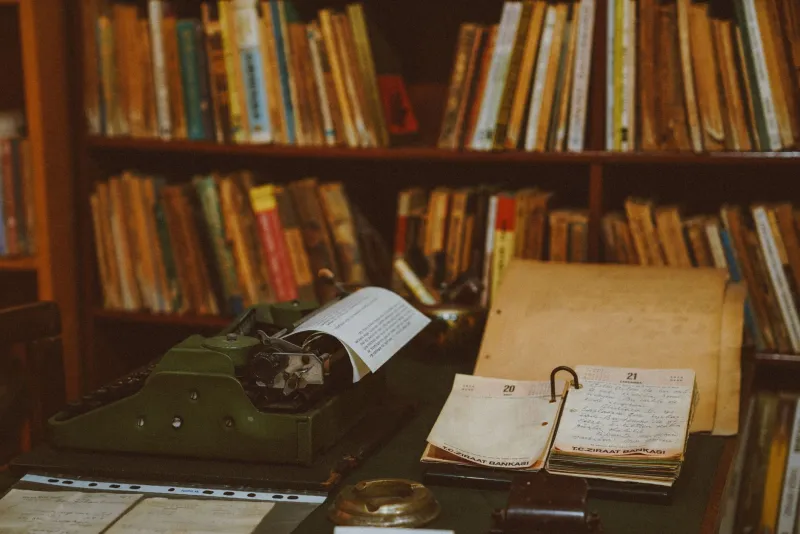
Photo: Damian B Oh, CC BY-SA 4.0, via Wikimedia Commons
At 5:47 on a Tuesday morning in November, the parking lot behind the regional library service center is the coldest place in Rock County, and Dawn Reinert is the only person standing in it.
She has eleven gray plastic totes to load, a route sheet printed in type small enough to make you squint, and a cargo van with 214,000 miles on the odometer. Somewhere in those totes is a book that spent last week on a shelf 190 miles from here. By 10:30 it will be sitting on the hold shelf at Luverne Public Library, waiting for a woman named Ruby who has been checking her account every day since the first of the month.
We call it interlibrary loan. It sounds like a form. It is actually a van, a clipboard, and a person who knows which gravel roads get soft after a rain.
Eleven totes, forty-some libraries, one very long Tuesday
The circuit that feeds our hold shelf runs three days a week and touches more than forty libraries across eleven counties -- public libraries, school media centers, a community college, and two county historical societies that most people don't know exist. Materials travel in reusable totes that weigh about forty pounds when they're full. Last year the route moved roughly 6,000 items in and out of Luverne alone.
There is no conveyor belt and no sorting robot. There is a route sheet with library names in a fixed order, because the order is the whole system. Change the order and you change everybody's afternoon.
Dawn has driven this run for nine years. She can tell you which loading dock has a doorbell that doesn't work, which librarian leaves cookies out in December, and which one will chase you down the sidewalk if you leave a tote three feet from where it belongs.
One book's very good week
We picked a single item and followed it. A large-print copy of Lonesome Dove, requested by a Luverne patron for a brother-in-law who has read it twice in standard print and once more in the hospital.
Day one: the book came off a shelf in a library two counties north, was scanned out, and went into a tote. Day two: two transfer points and one near-miss with a school parking lot full of buses. Day three: scanned in at our back door at 9:52 a.m., cataloged as arrived, labeled with a hold slip, and shelved on the pickup rack before ten.
Nobody involved in that journey thought it was remarkable. That's the part worth noticing.
The notes in the bottom of the tote
Here is the thing the software doesn't capture. Interlibrary loan runs on handwriting.
Taped to the inside lid of one tote: Pipestone -- please send theirs back, ours has the fold-out map. On a scrap of paper clipped to a book: Patron says the last chapter is loose. Not our fault. Don't tape it. On a sticky note in handwriting so small it required reading glasses and a second opinion: If this comes back to you, you have our copy and we have yours. Call me, don't email. -- M.
These notes are not in the system. They are the system, layered on top of it. A courier who ignores a handwritten instruction will hear about it within the week, usually in the form of a very polite phone call that is not actually polite.
When the weather writes the schedule
The route has no plan for January that survives contact with January.
Two winters back, an ice storm closed the highway on the eastern leg of the run. The van sat for four hours in a gas station lot while the routes for three counties reshuffled in real time. Books that were supposed to arrive Tuesday showed up Thursday. Ruby waited. Everybody waited. That is the difference between a library and a warehouse -- nobody in the pipeline treats a delayed book as a lost cause, and nobody in Luverne blames the driver for the sky.
The rural geography is the other constraint nobody plans around. Plenty of towns in this part of the state have no library of their own and haven't for decades. Their readers show up on our hold shelf instead, or at a drop box outside a senior center, or at a pickup arrangement that a town clerk runs out of an office that is really just a desk with a flag. The van goes where the shelves are. When there are no shelves, the van goes to whoever volunteered to be one.
Quiet diplomacy, forty pounds at a time
The couriers end up as ambassadors. Two libraries that have quietly disagreed for years about a DVD set that keeps bouncing between them. A reference book that technically belongs to a library that closed in 2009 and that everyone has silently agreed to keep in circulation rather than declare orphaned. One driver who, for six years, carried a specific large-print title to a homebound patron in a town that wasn't on the route, because the driver added a four-minute detour and never told anybody.
Asked what part of the job she'd want people to understand, Dawn doesn't say anything about logistics. She says: "People think the book comes from a computer. It comes from a shelf, and then it rides with me."
If your hold arrives this week, it probably passed through her hands. Maybe leave the slip on the book a minute before you peel it off. Somebody drove four counties to get it here.