Staples, Tabs, and Lost Cats: A Week Inside Luverne's Paper Internet
On a gray Monday morning in November 2026, I stood by the west entrance of Luverne Public Library and counted 54 pieces of paper. By Friday, the number had changed three times. That is the first thing to understand about the community bulletin board: it is not an archive. It is a feed.
I spent seven days reading every flyer, index card, handwritten plea, and tear-off tab. I photographed them, noted dates, watched which tabs disappeared, and asked the front desk which notices had been claimed. This was not a scientific study. It was closer to standing in a busy hallway and listening.
What I found was a local social network with no login screen. It has pushpins instead of algorithms, staples instead of moderation queues, and a very literal kind of reach: you have to walk up to it.
A Network With Pushpins
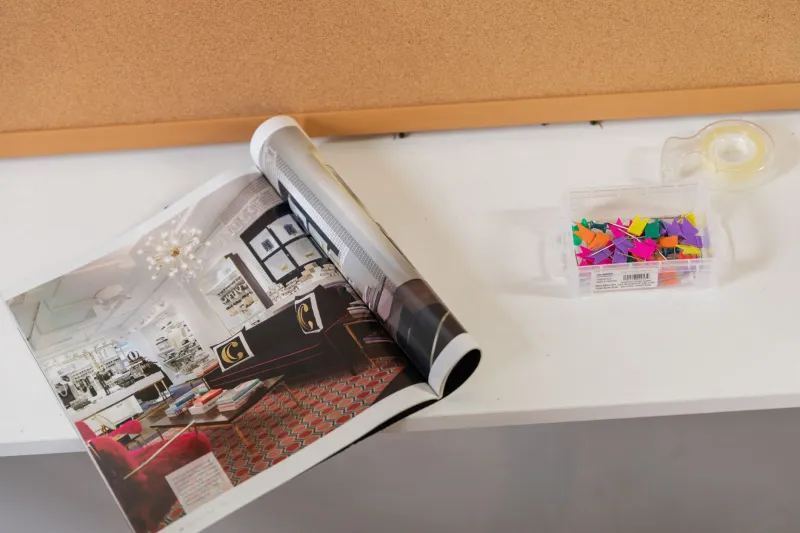
The board sits just inside the west entrance, near the pamphlet rack and the return bin. It is cork, framed in dark wood, and it fills up fast. On day one, I sorted the notices into rough piles: civic meetings, services, lost and found, classes, free stuff, faith and community events, and help wanted.
A yellow index card announced that the Luverne City Council would meet the second Tuesday of the month. A typed flyer advertised piano lessons two blocks from the library. Someone had stapled a grocery bag tag to a note offering free moving boxes. A handwritten card asked for a ride to Sioux Falls on Thursdays and promised gas money. Near the bottom corner, a child's handwriting explained that a gray tabby named Pepper had slipped out near the fairgrounds. Twelve tear-off tabs ran along the bottom. By Wednesday, four were gone.
The tear-off tabs are the engine of the whole thing. A phone number repeated a dozen times turns a sheet of paper into a tiny distribution system. When a tab disappears, you know someone acted. There are no likes on this board, but a torn tab is a click.
What Gets Posted, and What Gets Torn Off
Most of the notices are practical. They are not announcements of achievement or polished event promos. They are requests. A ladder to borrow. A recommendation for a plumber. A ride. A ride offered. A tutor for algebra. A church bazaar. A lost set of keys. A coat drive. A city meeting agenda. A beginner knitting circle looking for one more person.
That practicality is the point. Facebook can do all of this, technically. But a Facebook group is a river. The board is a doorway. You do not scroll past it. You stand in front of it, often because you came for something else, and you learn that your neighbor needs moving boxes or that the library is hosting a Medicare workshop.
There is also a difference in who feels welcome. Some people in Luverne do not use Facebook. Some use it but do not want their address or phone number in a comment thread. Some are new in town and have not joined the right groups yet. The board asks nothing of them. No profile, no password, no profile picture. Just a pushpin and a phone number.
The Moderation Is a Stapler
Library staff do not fact-check the board. They do something more modest and more useful: they date-stamp notices, keep an eye on the rules, and clear out the stale ones. The front desk keeps a small stamp and a short list of expectations. Keep it local. Date it. Take it down when it is done. Leave room for other people.
That light touch matters. The board is not a free-for-all, but it is not a curated magazine either. It is a shared surface. People self-police. A notice that has been up too long gets quietly removed. A handwritten thank-you note appears after a lost cat comes home. One afternoon I saw a new card tucked under Pepper's original flyer: 'Found. Home safe. Thanks, neighbors.' That is the board's version of a resolved thread.
Why the Paper Feed Still Wins
The board is not nostalgic. It is not trying to be charming. It is just unusually good at a few things.
First, it is local by default. A notice about a lost cat near the fairgrounds is relevant to the person standing in front of it. A notice about a city meeting is relevant to a voter. The board does not need to guess your interests because it is already in your neighborhood.
Second, it is low-stakes. You can read every notice and never identify yourself. You can take a tab without commenting. You can post a request without explaining your whole life.
Third, it creates serendipity. You come in for a mystery novel and leave knowing about a coat drive. Facebook shows you what it thinks you want. The board shows you what your neighbors need.
It is not perfect. Handwriting can be hard to read. Tabs run out. Some notices are out of date. The board skews older, and it cannot reach everyone. It is a complement to digital tools, not a replacement. But in a year when so much local news arrives through feeds that are designed to keep us scrolling, the corkboard is a useful corrective. It is finite. It gets cleared. It asks for a small amount of attention and gives back a small amount of connection.
How to Join the Feed
If you have a notice, bring it to the front desk at Luverne Public Library. Staff will date-stamp it and find a spot if there is room. Include a phone number or email, and add tear-off tabs if you want people to take the information with them. If you are looking for help, post it. If you can help, take a tab.
The board is free, it is open during library hours, and it is one of the few social networks in Luverne that does not want your data. It just wants your pushpin.